

Re-Inventing the Bicycle: A Modification of the Sauve-Kapandji Procedure
DOI:
https://doi.org/10.14740/jcs1013Keywords:
Rheumatoid arthritis, Madelung deformity, DRUJ, Sauve-KapandjiAbstract
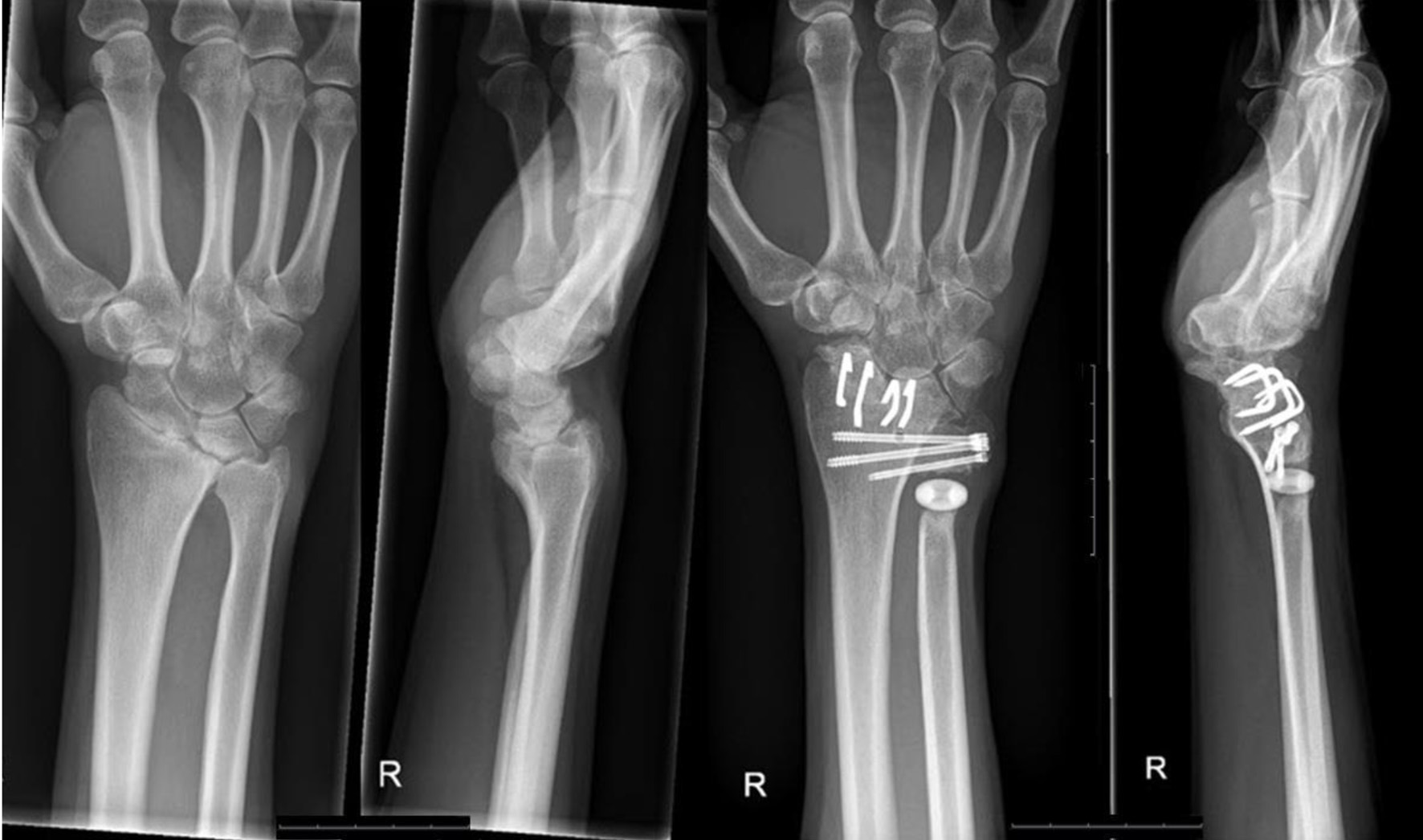
The Sauve-Kapandji (SK) procedure is a well-established treatment for distal radioulnar joint (DRUJ) osteoarthritis and instability, but long-term instability of the proximal ulnar stump remains a common cause of pain and functional limitation. Soft tissue stabilization techniques, particularly using an extensor carpi ulnaris (ECU) tendon slip, have shown reliable long-term outcomes. Another frequent complication is heterotopic ossification or synostosis at the osteotomized non-union site, which restricts forearm rotation. Pyrolytic carbon implants, known for their biocompatibility, durability, and favorable mechanical properties, have demonstrated success in small joint arthroplasty. We describe a novel modification of the SK procedure using a PyroDisk™ implant interposed at the distal ulnar osteotomy to maintain the non-union gap, combined with ECU tendon stabilization to improve proximal ulnar stump stability. We report three clinical cases treated with this modified SK technique, demonstrating significant improvements in pain relief, range of motion (ROM), grip strength, and stability at an average follow-up of 14 months. Radiographic evaluation showed maintenance of the osteotomy gap without recurrent ossification or implant-related complications. These preliminary findings suggest that this modification could provide a promising alternative to traditional SK techniques, potentially overcoming major limitations related to instability and synostosis. Written informed consent was obtained from all patients prior to surgery.
Published
Issue
Section
License
Copyright (c) 2026 The authors

This work is licensed under a Creative Commons Attribution 4.0 International License.