Journal of Current Surgery, ISSN 1927-1298 print, 1927-1301 online, Open Access
Article copyright, the authors; Journal compilation copyright, J Curr Surg and Elmer Press Inc
Journal website https://jcs.elmerpub.com

Original Article

Volume 15, Number 2, November 2025, pages 37-41


Accuracy of the Set Tidal Volume During Intraoperative Administration of Aerosols Into the Anesthetic Circuit: An In Vitro Evaluation

Figures

Figure 1.
Figure 1. The Aerogen device used for nebulization during the current study. The device uses vibrating mesh technology which does not require the addition of a high-flow oxygen source which distinguishes it from commonly used high-flow nebulizing devices.
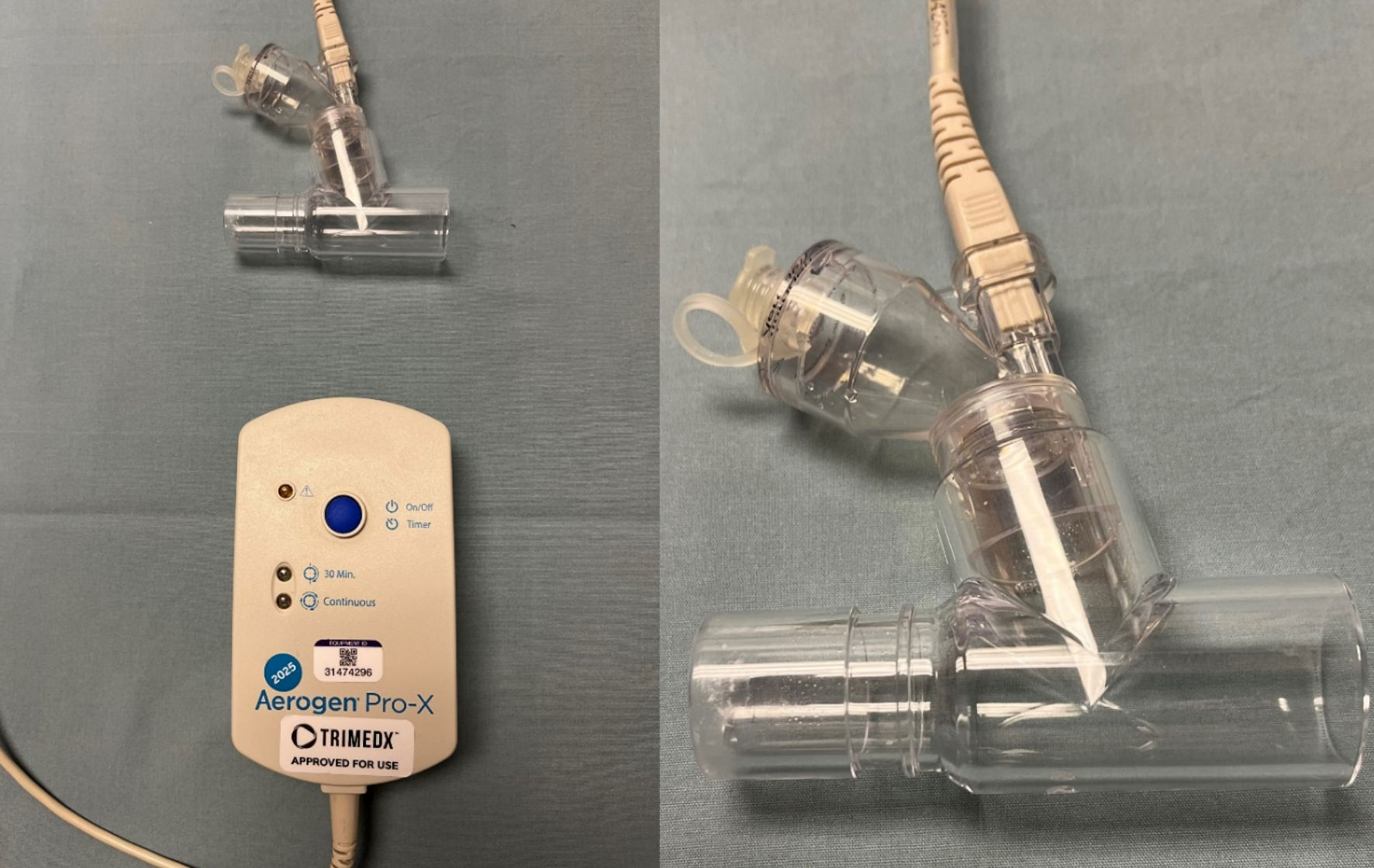
Figure 2.
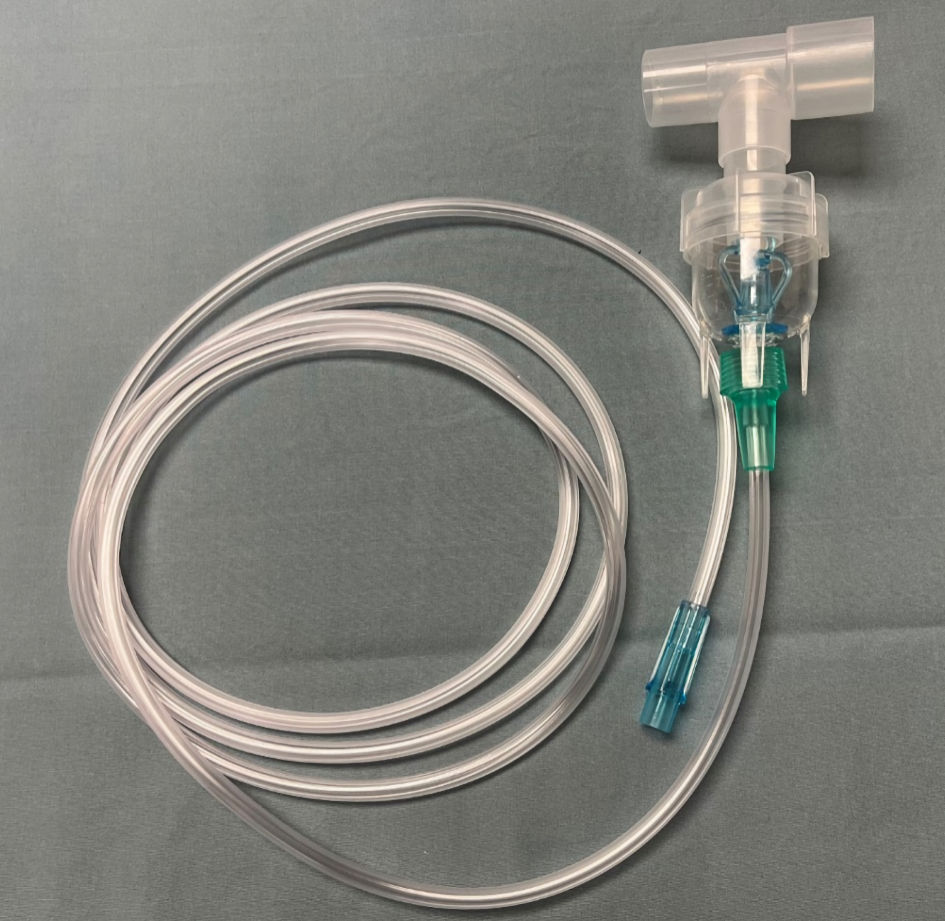
Figure 2. Standard high flow nebulizing device that uses a high flow oxygen source to nebulize and aerosolize medications.
Figure 3.
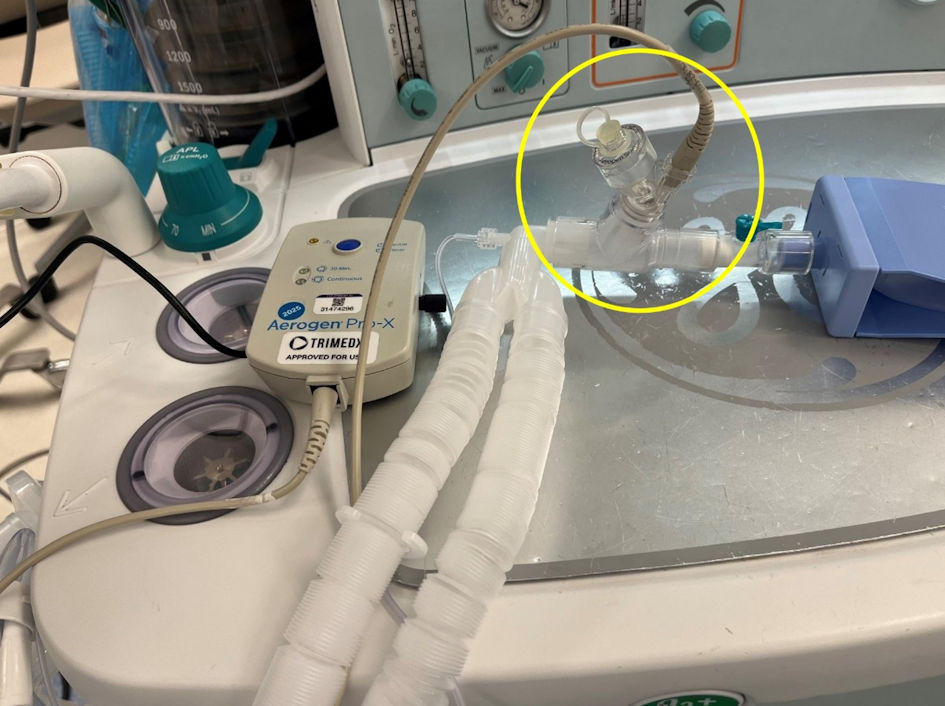
Figure 3. For this in vitro study, the Aerogen device was placed between the Y-piece of the anesthesia circuit and the 15-mm adaptor of the lung analogue model for the delivery of aerosolized medications.

Table

Table 1. Inspiratory and Expiratory Vt Values With and Without Aerosol Administration
 
SettingInspiratory Vt (control)Inspiratory Vt (aerosol)Expiratory Vt (control)Expiratory Vt (aerosol)
The data are presented as the mean ± standard deviation (SD) from 250 breaths. The volumes listed were measured by internal spirometer of the anesthesia machine without aerosols. *P < 0.01 when aerosol value is compared to corresponding control value. VCV: volume-controlled ventilation; PCV: pressure-controlled ventilation; Vt: tidal volume.
VCV 150 mL150 ± 0.4150 ± 0.2159 ± 0.5163 ± 1.1*
VCV 300 mL300 ± 0.3300 ± 0.5301 ± 0.7303 ± 1.4*
PCV 15 cm H2O173 ± 0.5169 ± 1.8*175 ± 0.5178 ± 1.6*
PCV 20 cm H2O271 ± 0.9259 ± 1.7*273 ± 0.9270 ± 1.4*