| Journal of Current Surgery, ISSN 1927-1298 print, 1927-1301 online, Open Access |
| Article copyright, the authors; Journal compilation copyright, J Curr Surg and Elmer Press Inc |
| Journal website https://jcs.elmerpub.com |
Original Article
Volume 16, Number 2, September 2026, pages 40-48

Early Surgery in Crohn’s Disease: Clinical and Evolutionary Profile
Rayhan Rejeba, b, c, Asma Ben Mohameda, b, Manel Yakoubia, b, Ghada Gharbia, b, Moufida Mahmoudia, b, Amal Khsibaa, b, Mouna Medhiouba, b, Mohamed Lamine Hamzaouia, b
aUniversity of Tunis El Manar, Faculty of Medicine of Tunis, Tunis 1007, Tunisia
bGastroenterology Department, Hospital Mohamed Taher Maamouri, Nabeul 8000, Tunisia
cCorresponding Author: Rayhan Rejeb, University of Tunis El Manar, Faculty of Medicine of Tunis, Tunis 1007, Tunisia
Manuscript submitted May 22, 2026, accepted August 4, 2026, published online August 29, 2026
Short title: Early surgery in Crohn’s Disease
doi: https://doi.org/10.14740/jcs1047
| Abstract | ▴Top |
Background: Crohn’s disease (CD) is a chronic condition with increasing prevalence, where early management is crucial for improving long-term prognosis. This study aimed to assess the rate of early surgery, identify associated factors, and compare the outcomes of patients undergoing early surgery, late surgery, and those treated medically.
Methods: We conducted a retrospective single-center study of 120 CD patients hospitalized at Mohamed Taher Maamouri Hospital between 2012 and 2023. Early surgery was defined as intestinal resection within 12 months of diagnosis. Three groups were defined: early surgery, late surgery, and no surgery. Clinical characteristics, predictive factors, and long-term outcomes, were analyzed using multivariable logistic regression and Kaplan–Meier survival analysis.
Results: The mean age was 39 years, with a male-to-female ratio of 1.22. Surgery was performed in 47.5% of patients (n = 57), with 25.8% (n = 31) undergoing early surgery. Twelve patients (10%) had surgery at diagnosis, mainly due to acute intestinal obstruction. Ileocecal resection was performed in 77.2% of cases. Postoperatively, 53.7% achieved durable clinical remission, while 24.5% had postoperative adverse outcomes. Multivariate analysis identified a complicated onset (P = 0.02) and no initial corticosteroid use (P = 0.016) as factors associated with early surgery. Although overall follow-up duration was longer among patients undergoing early surgery, recurrence-free, postoperative adverse event-free survival, corticosteroid-free, and reoperation-free survival were significantly longer in the late surgery group. The no surgery group had shorter survival, though this difference was not significant (P = 0.9).
Conclusions: In our cohort, patients undergoing early surgery frequently presented with complicated diseases requiring urgent surgical intervention. Consequently, the less favorable long-term outcomes observed after early surgery probably reflect greater disease severity at presentation rather than the timing of surgery itself. These findings should therefore be interpreted cautiously, particularly when comparing our cohort with populations managed in healthcare systems where earlier diagnosis and wider access to biologic therapy are available.
Keywords: Crohn’s disease; Surgery; Clinical pathway
| Introduction | ▴Top |
Crohn’s disease (CD) is a chronic, progressive, and destructive inflammatory bowel disease characterized by alternating periods of relapse and remission [1]. Despite advancements in medical therapy, surgical intervention remains almost inevitable in the management of complicated or refractory CD [2]. The timing of surgical intervention, particularly early surgery, has gained increasing attention due to its potential impact on long-term disease outcomes [3, 4]. However, the decision to perform early surgery remains a subject of debate, with conflicting evidence regarding its benefits and risks.
Recent studies suggest that early surgical intervention may improve outcomes by rapidly addressing complications such as strictures, fistulas, and abscesses, which contribute significantly to morbidity and reduced quality of life [5, 6]. Furthermore, surgery may offer a more durable remission compared to long-term medical therapy, which can lose efficacy over time [7, 8]. However, early surgery may also be associated with higher rates of postoperative complications and a more complex disease course, warranting careful patient selection based on disease severity and phenotype.
In Tunisia, data on CD and the role of early surgery are scarce. Therefore, our study aimed to provide insights into the clinical profile of Tunisian patients undergoing early surgery for CD and to compare their short- and long-term outcomes with those of patients undergoing late surgery or no surgery. Therefore, we conducted a retrospective cohort study to determine the rate of early surgical intervention in a Tunisian population with CD and identify associated clinical and epidemiological factors and to compare the short- and long-term outcomes of patients undergoing early surgery with those undergoing late surgery or managed medically.
| Materials and Methods | ▴Top |
Study design
This was a retrospective, observational, single-center study conducted at the Gastroenterology Department of Mohamed Taher Maamouri Hospital in Nabeul, Tunisia, from January 2012 to December 2023.
This study was approved by the Institutional Ethics Committee of Mohamed Taher Maamouri Hospital and conducted in accordance with the Declaration of Helsinki.
Population
Inclusion criteria
Patients over 16 years old with ileal, ileocecal, colonic, or ileocolic CD, whether medically treated or having undergone ileal, ileocecal, colonic, or ileocolic resection were included.
Exclusion criteria
Patients with isolated anorectal or upper gastrointestinal involvement, colorectal cancer secondary to CD, or a follow-up duration of less than 6 months were excluded.
Definition of early surgery
Early surgery was defined as surgical intervention (intestinal resection) within 12 months of CD diagnosis, a timeframe chosen based on its adoption in the majority of publications.
Study outcomes
The primary objective of this study was to identify factors associated with early intestinal resection in patients with CD.
Secondary objectives were to compare the postoperative and long-term outcomes of patients undergoing early surgery with those undergoing late surgery, as well as with patients managed medically.
Postoperative recurrence included both clinical recurrence and endoscopic recurrence during follow-up.
Early postoperative complications were defined as direct surgery-related adverse events occurring during the immediate postoperative period, including intra-abdominal collections. Anastomotic strictures diagnosed during long-term follow-up were considered long-term postoperative outcomes rather than surgical complications.
Reoperation was defined as any subsequent intestinal surgical procedure performed after the initial resection, whether for CD recurrence or postoperative surgical complications.
Time-to-event analyses included recurrence-free survival, postoperative adverse event-free survival, corticosteroid-free survival, therapeutic escalation-free survival, and reoperation-free survival. For each endpoint, survival time was calculated from the date of surgery until the occurrence of the corresponding event or the end of follow-up.
Additional exploratory analysis
To further address the potential influence of surgical indications on postoperative outcomes, an additional exploratory analysis was performed. Patients who underwent surgery were classified according to the surgical setting as either emergency or elective surgery. Emergency surgery was defined as surgery performed for acute complications requiring urgent intervention, whereas elective surgery referred to planned procedures performed after clinical evaluation and preoperative optimization.
Data collection
Data were collected from medical records using a standardized data sheet, including: (1) demographic and clinical characteristics; (2) laboratory, radiological, and endoscopic findings at diagnosis; (3) surgical details, including indications, type of surgery, and postoperative outcomes; and (4) long-term follow-up data, including the duration of postoperative follow-up, clinical and endoscopic recurrence, postoperative complications and outcomes, reoperations, corticosteroid exposure, therapeutic escalation, and maintenance therapy.
Statistical analysis
Data were analyzed using SPSS version 25. Descriptive statistics were used to summarize the population’s characteristics. Comparative analyses were conducted using Chi-square and t-tests for categorical and continuous variables, respectively. Time-to-event analyses were performed using the Kaplan–Meier method to estimate recurrence-free, adverse outcome-free, corticosteroid-free, therapeutic escalation-free, and reoperation-free survival. Survival distributions were compared using the log-rank test.
Ethical consideration
Strict anonymity of the individual data was respected throughout the study. Given the retrospective nature of the study, it was not possible to obtain informed consent from the patients.
| Results | ▴Top |
Baseline characteristics of the patients
A total of 120 patients with a confirmed diagnosis of CD were enrolled in our study. The mean follow-up period was 77.5 ± 70.8 months, with a maximum follow-up time of 369 months. The mean age at diagnosis was 39 ± 14 years, with a male-to-female ratio of 1.22. The clinical and biological characteristics of the population are summarized in Table 1.
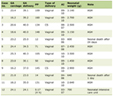 Click to view | Table 1. Clinical and Biological Characteristics of the Patients at Diagnosis |
The initial imaging examination revealed complications in 38 patients (29.2%). Ulcerative ileitis and congestive ileo-colitis were the two most common endoscopic findings (25.9% and 25%, respectively). Histopathological examination showed chronic inflammatory lesions in 48.1% of cases. The main therapies included corticosteroids (50.8%), immunosuppressants (44.2%), salicylates (30.8%) and anti-tumor necrosis factor (anti-TNF, 5%). Approximately 60% of patients experienced disease flare-ups, and 41.7% needed a therapy escalation.
Rate of surgery
The overall prevalence of surgery in the studied population was 47.5% (57 patients), with an early surgery rate of 25.8% (31 patients). The mean time to surgery in this group was 4 ± 4.3 months. In 10% of cases, surgery was required at the time of diagnosis.
Indications and types of surgery
The primary indications for surgery were acute intestinal obstruction (26.3%), localized ileal disease (22.8%) and failure of medical treatment (19.3%).
In the early surgery group, the main surgical indications were acute intestinal obstruction in nine cases (29%), as well as the presence of intra-abdominal collections and fistulas, each observed in four cases (12.9%). The most performed procedure was ileocecal resection (ICR) in 77.2% of cases, as well as for the early surgery group, accounting for 83.9% of cases.
The mean ileal resection length was 28 ± 18.5 cm (5–70 cm).
Postoperative outcomes
After surgical treatment, 29 patients (53.7%) achieved sustained clinical remission, with endoscopic remission in 23.8% of cases. Among patients who experienced postoperative recurrence (47.3%), 41.3% required optimization of maintenance therapy. Postoperative adverse outcomes occurred in 24.5% of patients and mainly consisted of intra-abdominal abscesses (as early direct surgical complications) and anastomotic strictures (in the long term).
The rate of reoperation was 10.5%, with clinical remission achieved in 66.7% of cases. The majority of operated patients (n = 31, 55.4%) received azathioprine (AZA) for postoperative recurrence prevention.
The comparison of postoperative outcomes between the early and late surgery groups is summarized in Table 2.
Click to view | Table 2. Postoperative Outcomes in Early Versus Late Surgery Groups |
Comparative analysis
Comparison of demographic, clinical, and paraclinical parameters between the early surgery group and the non-operated group revealed significant differences for obesity (3.2% vs. 14.3%, P = 0.049), inflammatory behavior (3.2% vs. 60.3%, P < 0.001), colonic location (3.2% vs. 23.8%, P = 0.006), hyperleukocytosis at diagnosis (P = 0.029), and the presence of complications on initial imaging (67.7% vs. 32.3%, P < 0.001).
Comparison between the “early surgery” and “late surgery” groups showed significant differences regarding the timing of the first colonoscopy (P = 0.037), corticosteroid use at diagnosis (29% vs. 80.8%, P < 0.001), and the presence of complications at diagnosis (67.7% vs. 15.4%, P < 0.001).
Patients undergoing early surgery were more likely to present with obstructive symptoms and have localized ileal involvement at diagnosis compared to those managed medically or undergoing late surgery.
Factors associated with early surgery
Univariate analysis identified normal body mass index (BMI, P = 0.05), intestinal obstruction at diagnosis (P < 0.001), ileal location (P = 0.025), penetrating behavior (P < 0.001), ileocecal valve stenosis at first colonoscopy (P = 0.013), presence of complications on initial imaging (P < 0.001), and absence of corticosteroid use at diagnosis (P = 0.005) as factors significantly associated with early surgery.
Multivariate analysis identified the presence of complications at diagnosis (P = 0.02) and the absence of initial corticosteroid therapy (P = 0.016) were the only independent factors associated with early surgery (Table 3).
Click to view | Table 3. Factors Associated With Early Surgery in Univariable and Multivariable Analysis |
Survival analysis
The overall follow-up duration was longer in patients undergoing early surgery than in those undergoing late surgery (Table 4). However, Kaplan–Meier analyses demonstrated significantly shorter recurrence-free (Fig. 1a), adverse outcome-free (Fig. 1b), therapeutic escalation-free, reoperation-free (Fig. 1c) and corticosteroid-free (Fig. 1d) survival in the early surgery group compared with the late surgery group (Table 5).
Click to view | Table 4. Comparison of the Estimated Overall Follow-Up Duration According to Treatment Group |
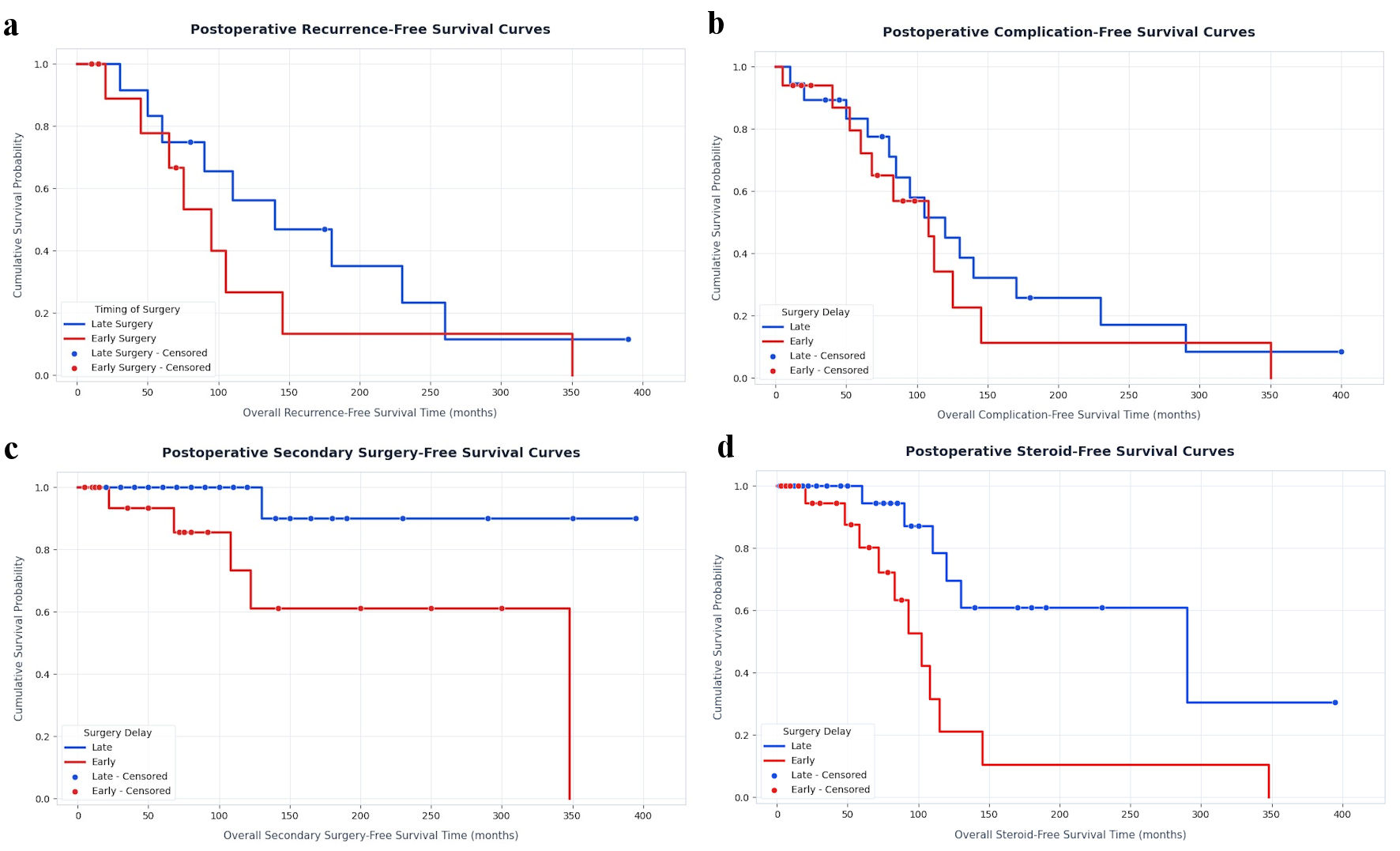 Click for large image | Figure 1. Kaplan–Meier survival curve for (a) postoperative recurrence-free survival in early and late surgery groups; (b) postoperative adverse outcome-free survival in early and late surgery groups; (c) reoperation-free survival in early and late surgery groups; (d) corticosteroid-free survival in early and late surgery groups. |
Click to view | Table 5. Time-to-Event Analyses According to Treatment Group |
Among medically managed patients, event-free follow-up was shorter than in the early surgery group, although these differences did not reach statistical significance.
Comparison between emergency and elective surgery
An additional exploratory analysis was conducted to investigate whether the surgical setting influenced long-term postoperative outcomes.
Among the 57 operated patients, 27 underwent emergency surgery and 30 underwent elective surgery. Patients undergoing emergency surgery were significantly more frequently male (81.5% vs. 46.7%, P = 0.007), active smokers (66.7% vs. 36.7%, P = 0.024), and had a lower mean BMI (20.3 ± 3.5 vs. 22.8 ± 4.6 kg/m2, P = 0.030). No significant differences were observed regarding disease location (P = 0.337) or disease phenotype (P = 0.985).
Kaplan–Meier analyses demonstrated no statistically significant differences between emergency and elective surgery regarding recurrence-free survival (log-rank P = 0.626), long-term postoperative adverse event-free survival (P = 0.799), reoperation-free survival (P = 0.249), or corticosteroid-free survival (P = 0.856).
| Discussion | ▴Top |
The definition and reported rates of early surgery in CD vary across studies, depending largely on how early surgical intervention is defined in relation to diagnosis. Agrawal et al [3] considered early surgery as a resection performed within 30 days before or up to 1 year after diagnosis, reporting a rate of 45.4%. Sarikaya et al [9] defined early surgery as any intestinal resection within 6 months of diagnosis and observed a rate of 38.9%. Magro et al [10] focused on resections performed within 6 months before the initiation of immunosuppressive therapy, reporting a 32.3% early surgery rate. In our cohort, the early surgery rate was 25.8%, which is slightly lower than those previously reported. This difference may be explained by variations in study design, patient selection, healthcare organization, and access to biological therapies.
Unlike several contemporary studies evaluating elective early surgery, the majority of patients in our early surgery group underwent urgent surgical intervention because of complicated disease at presentation, including intestinal obstruction, intra-abdominal abscesses, or fistulas. Consequently, in many cases, surgery reflected advanced disease at diagnosis rather than an intentionally adopted early therapeutic strategy. This distinction is important when interpreting our findings because surgical timing in our cohort was strongly influenced by disease severity and delayed diagnosis.
Numerous studies have explored predictive factors associated with early surgery in CD. Zhu et al [11] reported that younger age at diagnosis and longer disease duration were associated with early surgery. In their multivariate analysis, previous intestinal resection and a high Lemann index (8.99) [12] emerged as independent risk factors, while an inflammatory phenotype was inversely correlated. Similarly, Yao et al [13] found that complicated behaviors, smoking, low BMI, elevated C-reactive protein (CRP) at diagnosis, prior intestinal resections, exclusive enteral nutrition, and intestinal wall thickness ≥ 4 mm were significantly associated with early surgery. Notably, biologic therapy was negatively associated with early surgical intervention. Golovics et al [4] highlighted corticosteroid use, ileal or colonic disease localization, and complicated disease behavior (B2 or B3) at diagnosis as significant factors.
In our study, late surgery was associated with longer recurrence-free survival compared to early surgery. This contrasts with findings by Margagnoni et al [14] and Aratari et al [15], who reported better long-term remission and lower reoperation rates with early surgical intervention.
Similarly, corticosteroid-free survival was longer in the late surgery group, whereas previous studies (Golovics et al [4], Latella et al [16], Agrawal et al [3]) suggested reduced corticosteroid use after early surgery.
Although escalation rates were similar, the time before treatment optimization was longer in the late surgery group. Some studies (Sarikaya et al [9], Kelm et al [17], Aratari et al [15]) support reduced need for immunosuppressants after early surgery, while Lee et al [18] found no difference. As for anti-TNF use, the LIR!C trial [6] and studies by An et al [19] showed lower biologic exposure following early resection.
Early postoperative surgical complication rates were comparable between groups. However, long-term postoperative outcome-free survival was longer in the late surgery group. This aligns with the study by Kelm et al [17], though Kotze et al [20] reported more adverse outcomes with delayed surgery, possibly due to more advanced disease.
Finally, while reoperation rates were similar between groups, the time to reoperation was significantly longer with late surgery. This contrasts with some studies (Margagnoni et al [14] Sarikaya et al [9], Latella et al [16]) favoring early surgery, but agrees with Magro et al [10], who found higher reintervention rates in early operated patients.
It is important to emphasize that in our cohort, most patients who underwent early surgery did so in an emergency setting, with complicated disease at presentation.
This context likely contributed to the less favorable long-term outcomes observed in our study compared to others where early surgery is often elective and performed in less advanced disease stages. Thus, the more aggressive clinical profile of our early surgery group may explain the divergence from previously reported benefits of early intervention.
Another important characteristic of our cohort is the very limited use of biological therapy. Only 5% of patients received anti-TNF treatment, reflecting the restricted access to biologics during much of the study period in our healthcare setting. Consequently, caution is warranted when extrapolating our findings to contemporary cohorts from high-income countries, where earlier diagnosis and widespread biologic use have substantially modified the natural history of CD.
To further address the potential confounding effect of surgical indication, we performed an additional exploratory analysis comparing emergency and elective surgery. Patients requiring emergency surgery more frequently presented with male sex, active smoking, and lower BMI, suggesting distinct baseline characteristics. However, no significant differences were observed in long-term postoperative outcomes between the two groups. These findings suggest that, in our cohort, the surgical setting itself did not appear to significantly influence long-term prognosis. Nevertheless, the relatively limited sample size may have reduced the statistical power to detect modest differences.
This study has several limitations. First, its retrospective single-center design may have introduced selection and information biases. Second, the study population was heterogeneous, including patients who underwent elective surgery as well as those requiring emergency surgery because of complicated disease at presentation. Consequently, the interval between diagnosis and surgery may not accurately reflect the true duration of disease, particularly in patients with delayed diagnosis. Third, despite multivariable analysis, residual confounding related to disease severity and surgical indication cannot be excluded. Fourth, the limited availability of biological therapies during the study period may reduce the applicability of our findings to contemporary cohorts managed in healthcare systems with broader access to biologics. Finally, postoperative follow-up duration varied between patients, which may have influenced time-to-event analyses.
Despite these limitations, our study provides one of the largest single-center cohorts evaluating early surgery in CD in Tunisia. The prolonged follow-up and the comparison of early surgery, late surgery, and medically managed patients allowed a comprehensive assessment of long-term outcomes in a real-world clinical setting.
Conclusions
In conclusion, this study provides valuable insights into the management of CD by highlighting factors associated with early surgery and offering a comparative evaluation of available therapeutic strategies. Our findings underscore the importance of personalized care, which involves a comprehensive assessment of the clinical and paraclinical characteristics of the disease, as well as patient preferences and economic considerations. Although early surgery presents potential benefits, it should be considered with caution given the risks of postoperative complications and the need for long-term follow-up. Clinicians must continue to carefully balance the benefits and risks of each therapeutic approach based on the best available evidence and tailor their strategy to the individual needs of patients.
Further research is needed to establish clear guidelines for early surgical intervention in CD, particularly in regions with limited data, such as Tunisia.
Acknowledgments
None to declare.
Financial Disclosure
The authors received no financial support for this study.
Conflict of Interest
The authors declare no conflict of interest.
Informed Consent
Due to the retrospective nature of the study, informed consent was waived.
Author Contributions
Rayhan Rejeb: study conception and design, data collection, data analysis and interpretation, and manuscript drafting. Asma Ben Mohamed: study conception and design, literature review, and critical revision of the manuscript. Manel Yakoubi: literature review, critical revision of the manuscript and intellectual contribution. Ghada Gharbi: critical revision of the manuscript and intellectual contribution. Moufida Mahmoudi: critical revision of the manuscript and intellectual contribution. Amal Khsiba: critical revision of the manuscript and intellectual contribution. Mouna Medhioub: critical revision of the manuscript and intellectual contribution. Mohamed Lamine Hamzaoui: study supervision, senior scientific guidance, and critical revision of the manuscript. All authors approved the final version of the manuscript and agreed to be accountable for all aspects of the work.
Data Availability
The data that support the findings of this study are available from the corresponding author upon reasonable request.
Abbreviations
AZA: azathioprine; BMI: body mass index; BIS: biological inflammatory syndrome; CD: Crohn’s disease; CRP: C-reactive protein; Hb: hemoglobin; IBD: inflammatory bowel disease; ICR: ileocecal resection; WBC: white blood cell count
| References | ▴Top |
- Arieira C, Curdia Goncaves T, Dias de Castro F, Joao Moreira M, Cotter J. Clinical course in Crohn's disease: factors associated with behaviour change and surgery. Scand J Gastroenterol. 2018;53(10-11):1222-1227.
doi pubmed - Latella G, Cocco A, Angelucci E, Viscido A, Bacci S, Necozione S, Caprilli R. Clinical course of Crohn's disease first diagnosed at surgery for acute abdomen. Dig Liver Dis. 2009;41(4):269-276.
doi pubmed - Agrawal M, Ebert AC, Poulsen G, Ungaro RC, Faye AS, Jess T, Colombel JF, et al. Early ileocecal resection for Crohn's disease is associated with improved long-term outcomes compared with anti-tumor necrosis factor therapy: a population-based cohort study. Gastroenterology. 2023;165(4):976-985 e3.
doi pubmed - Golovics PA, Lakatos L, Nagy A, Pandur T, Szita I, Balogh M, Molnar C, et al. Is early limited surgery associated with a more benign disease course in Crohn's disease? World J Gastroenterol. 2013;19(43):7701-7710.
doi pubmed - Ahmed Ali U, Kiran RP. Surgery for Crohn's disease: upfront or last resort? Gastroenterol Rep (Oxf). 2022;10:goac063.
doi pubmed - Ponsioen CY, de Groof EJ, Eshuis EJ, Gardenbroek TJ, Bossuyt PMM, Hart A, Warusavitarne J, et al. Laparoscopic ileocaecal resection versus infliximab for terminal ileitis in Crohn's disease: a randomised controlled, open-label, multicentre trial. Lancet Gastroenterol Hepatol. 2017;2(11):785-792.
doi pubmed - Ryan EJ, Orsi G, Boland MR, Syed AZ, Creavin B, Kelly ME, Sheahan K, et al. Meta-analysis of early bowel resection versus initial medical therapy in patient's with ileocolonic Crohn's disease. Int J Colorectal Dis. 2020;35(3):501-512.
doi pubmed - Carvello M, Danese S, Spinelli A. Surgery versus medical therapy in luminal ileocecal Crohn's disease. Clin Colon Rectal Surg. 2022;35(1):72-77.
doi pubmed - Sarikaya MZ, Zhao M, Lo B, Bendtsen F, Burisch J. Disease course and treatment outcomes of Crohn's disease patients with early or late surgery - a Danish nationwide cohort study from 1997 to 2015. Dig Liver Dis. 2023;55(7):872-879.
doi pubmed - Magro F, Dias CC, Coelho R, Santos PM, Fernandes S, Caetano C, Rodrigues A, et al. Impact of early surgery and immunosuppression on Crohn's disease disabling outcomes. Inflamm Bowel Dis. 2017;23(2):289-297.
doi pubmed - Zhu M, Feng Q, Xu X, Qiao Y, Cui Z, Yan Y, Ran Z. Efficacy of early intervention on the bowel damage and intestinal surgery of Crohn's disease, based on the Lemann index. BMC Gastroenterol. 2020;20(1):421.
doi pubmed - Pariente B, Cosnes J, Danese S, Sandborn WJ, Lewin M, Fletcher JG, Chowers Y, et al. Development of the Crohn's disease digestive damage score, the Lemann score. Inflamm Bowel Dis. 2011;17(6):1415-1422.
doi pubmed - Yao JY, Jiang Y, Ke J, Lu Y, Hu J, Zhi M. Development of a prognostic model for one-year surgery risk in Crohn's disease patients: A retrospective study. World J Gastroenterol. 2020;26(5):524-534.
doi pubmed - Margagnoni G, Aratari A, Mangone M, Moretti A, Spagnolo A, Fasci Spurio F, Luchetti R, et al. Natural history of ileo-caecal Crohn's disease after surgical resection. A long term study. Minerva Gastroenterol Dietol. 2011;57(4):335-344.
pubmed - Aratari A, Papi C, Leandro G, Viscido A, Capurso L, Caprilli R. Early versus late surgery for ileo-caecal Crohn's disease. Aliment Pharmacol Ther. 2007;26(10):1303-1312.
doi pubmed - Latella G, Caprilli R, Travis S. In favour of early surgery in Crohn's disease: a hypothesis to be tested. J Crohns Colitis. 2011;5(1):1-4.
doi pubmed - Kelm M, Germer CT, Schlegel N, Flemming S. The revival of surgery in Crohn's disease-early intestinal resection as a reasonable alternative in localized ileitis. Biomedicines. 2021;9(10):1317.
doi pubmed - Lee JM, Lee KM, Kim JS, Kim YS, Cheon JH, Ye BD, Kim YH, et al. Postoperative course of Crohn disease according to timing of bowel resection: Results from the CONNECT Study. Medicine (Baltimore). 2018;97(16):e0459.
doi pubmed - An V, Cohen L, Lawrence M, Thomas M, Andrews J, Moore J. Early surgery in Crohn's disease a benefit in selected cases. World J Gastrointest Surg. 2016;8(7):492-500.
doi pubmed - Kotze PG, Magro DO, Martinez CAR, Spinelli A, Yamamoto T, Warusavitarne J, Coy CSR. Long time from diagnosis to surgery may increase postoperative complication rates in elective CD intestinal resections: an observational study. Gastroenterol Res Pract. 2018;2018:4703281.
doi pubmed
This article is distributed under the terms of the Creative Commons Attribution 4.0 International License (CC BY 4.0), which permits unrestricted use, distribution, and reproduction in any medium, including commercial use, provided the original work is properly cited.
Journal of Current Surgery is published by Elmer Press Inc.