

The Necessity of Surgical Intervention in Acute Intracerebral Hematomas
DOI:
https://doi.org/10.14740/jcs1030Keywords:
Intracerebral hemorrhage, Craniotomy, External ventricular drainage, Intraventricular hemorrhage, Glasgow Coma Scale, Surgical outcomeAbstract
Background: Spontaneous intracerebral hematoma (ICH) is a major cause of hemorrhagic stroke and is associated with high morbidity and mortality. Despite advances in neuroimaging, surgical techniques, and intensive care management, the optimal treatment strategy remains controversial. This study aimed to evaluate the demographic characteristics, hemorrhage features, underlying etiological factors, and clinical outcomes of patients who underwent surgical treatment for spontaneous ICH.
Methods: This descriptive study included patients with acute non-traumatic ICHs who were surgically treated between 2021 and 2025. Data regarding age, sex, comorbidities, use of anticoagulant or antiplatelet/fibrinolytic agents, pre- and postoperative Glasgow Coma Scale (GCS) scores, hemorrhage location and volume, ventricular involvement, surgical approach, and survival were retrospectively analyzed. Hematoma volume was calculated using the ABC/2 method.
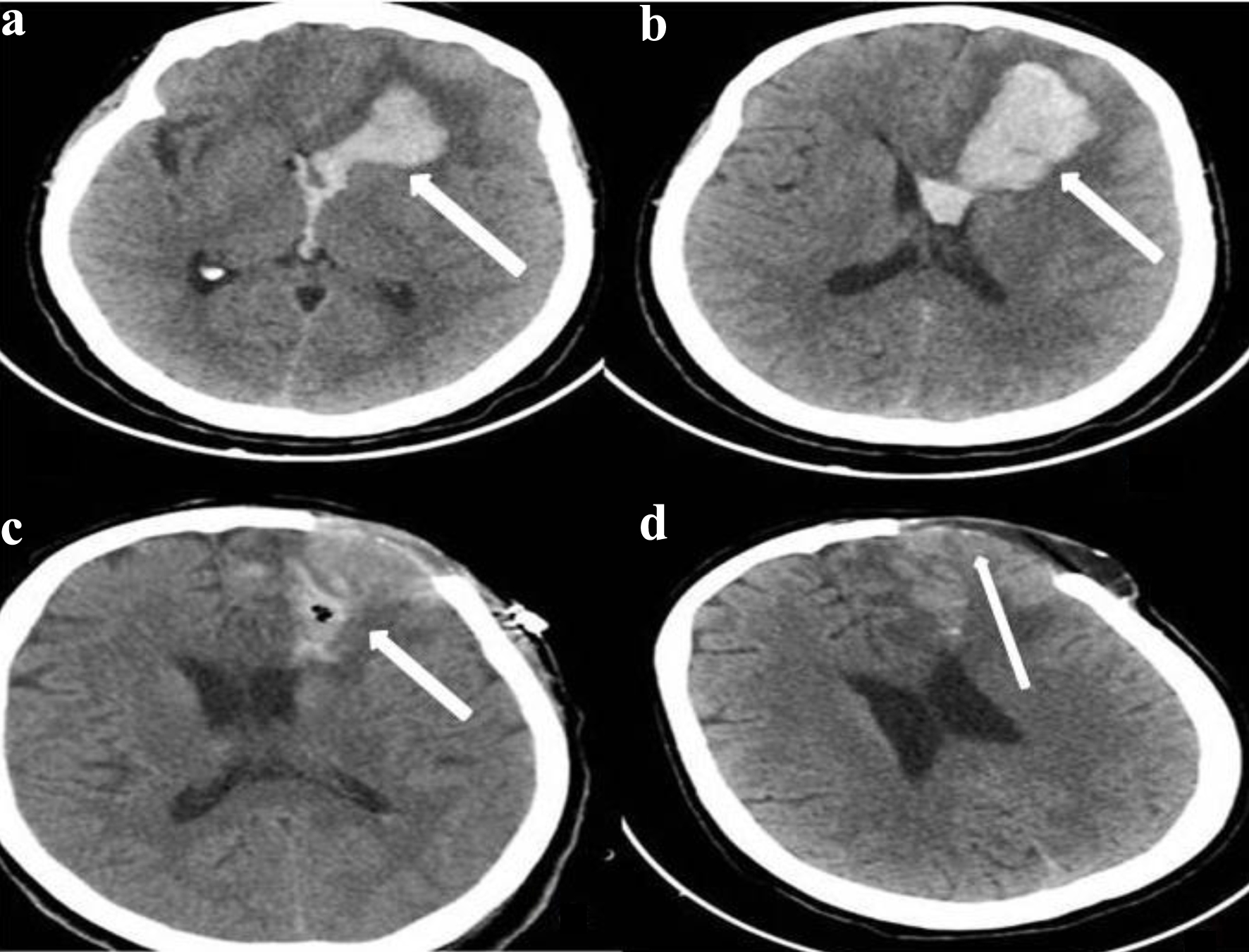
Results: A total of 52 patients were included. Hematoma evacuation via craniotomy was performed in 26 patients (55.31%), external ventricular drainage (EVD) in 21 patients (44.69%), and both procedures in five patients. The overall first-month mortality rate was 46.80%. The majority of patients (95.74%) had at least one chronic comorbidity, and 82.97% were receiving anticoagulant and/or antiplatelet/fibrinolytic therapy. Patients undergoing craniotomy had large hematoma volumes (45–150 cm3) and low preoperative GCS scores (median: 5). In the EVD group, the first-month mortality rate was 47.61%.
Conclusion: Spontaneous ICHs are frequently associated with antithrombotic therapy and multiple comorbidities. Despite persistently high mortality and morbidity—particularly in patients with low GCS scores, large hematoma volumes, and intraventricular hemorrhage—surgical intervention remains an important option, offering selected patients a chance of survival and protecting physicians from medicolegal problems. Careful patient selection and optimal intensive care management are critical determinants of outcome.
Published
Issue
Section
License
Copyright (c) 2026 The authors

This work is licensed under a Creative Commons Attribution 4.0 International License.